Almost every watch strap is held by two spring bars, small telescopic rods with sprung ends that sit in holes on the inside of the lugs. To change the band, you compress the spring bar, lift the strap out, and let the bar snap into the lug holes of the new strap. It is a five minute job, and the only real risk is a slipped tool scratching the lug.
Check this before you start
- Lug width. Measure the gap between the lugs in millimeters. The new strap must match it exactly, common sizes are 18, 20 and 22 mm.
- Quick-release lever. A small lever on the spring bar means no tool needed.
- Drilled lugs. Small holes on the outside of the lugs let you push the bar out from the outside, the easiest case.
- Special systems. Apple Watch, Garmin QuickFit and some integrated bracelets do not use standard spring bars. See the Apple Watch and Garmin guides.
How to change a watch strap, step by step
- Lay the watch face down on a soft cloth. Painter's tape on the lugs protects polished surfaces.
- Find the spring bar. Look between strap and lug, you will see the end of the bar under the strap edge.
- Compress it with the fork. Slide the fork end of the spring bar tool between strap and lug, catch the shoulder of the bar and push it toward the center of the strap.
- Lift the strap out. Once the tip clears the lug hole, tilt the strap out. Repeat on the other side.
- Fit the bar into the new strap. Slide the spring bar through the strap's end, or through the quick-release channel.
- Seat one end, then compress the other. Put one tip into its lug hole, compress the other end with the fork, align it with the opposite hole and let it snap in.
- Check both ends. Pull the strap firmly away from the case. A bar that is not seated comes out now, not on the street.
The mistake that scratches lugsPointing the fork toward the lug and pushing hard. When it slips, it goes straight into the polished side of the lug. Work toward the strap, not toward the case, and cover the lugs with painter's tape if the watch is precious.
How to remove a watch band
Removing a band is the first half of changing it: compress each spring bar and lift the strap out, as in steps 1 to 4 above. Metal bracelets come off the same way, the spring bar sits in the end link against the lug. A few designs are different: integrated bracelets, bracelets screwed to the case (such as some full metal G-Shock models) and brand systems like Apple Watch and Garmin QuickFit. If you do not see a spring bar between end link and lug, check your brand guide before prying.
Quick-release straps
Many modern straps have a small lever on the spring bar. Slide the lever with a fingernail, the bar retracts and the strap comes out. Fit the new strap by putting one end of the bar into the lug hole, sliding the lever, aligning the other end and letting go. Pull on the strap to check both ends are seated.
Drilled lugs
If you can see small holes on the outside of the lugs, push the spring bar tip inward through the hole with the fine pin end of a spring bar tool, and the strap drops out. This avoids working between strap and case entirely.
NATO and pass-through straps
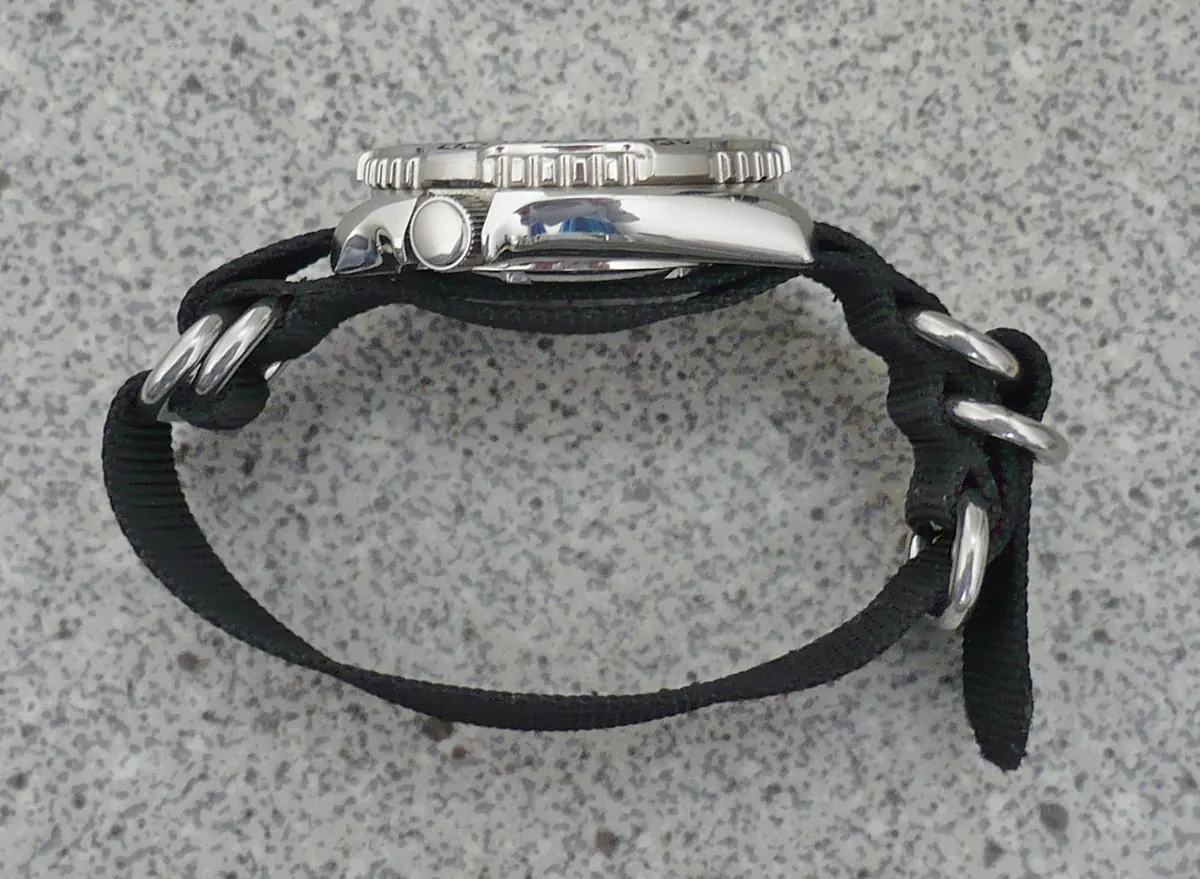
A true one-piece NATO strap threads behind the case, under the fixed spring bars. You do not remove the spring bars at all: thread the long end down between the bar and the case at 12 o'clock, pull it through and up at 6 o'clock, then close it at the buckle and tuck the end through the keepers. Watch the orientation, the buckle must end up at 12 o'clock.
Choosing spring bars
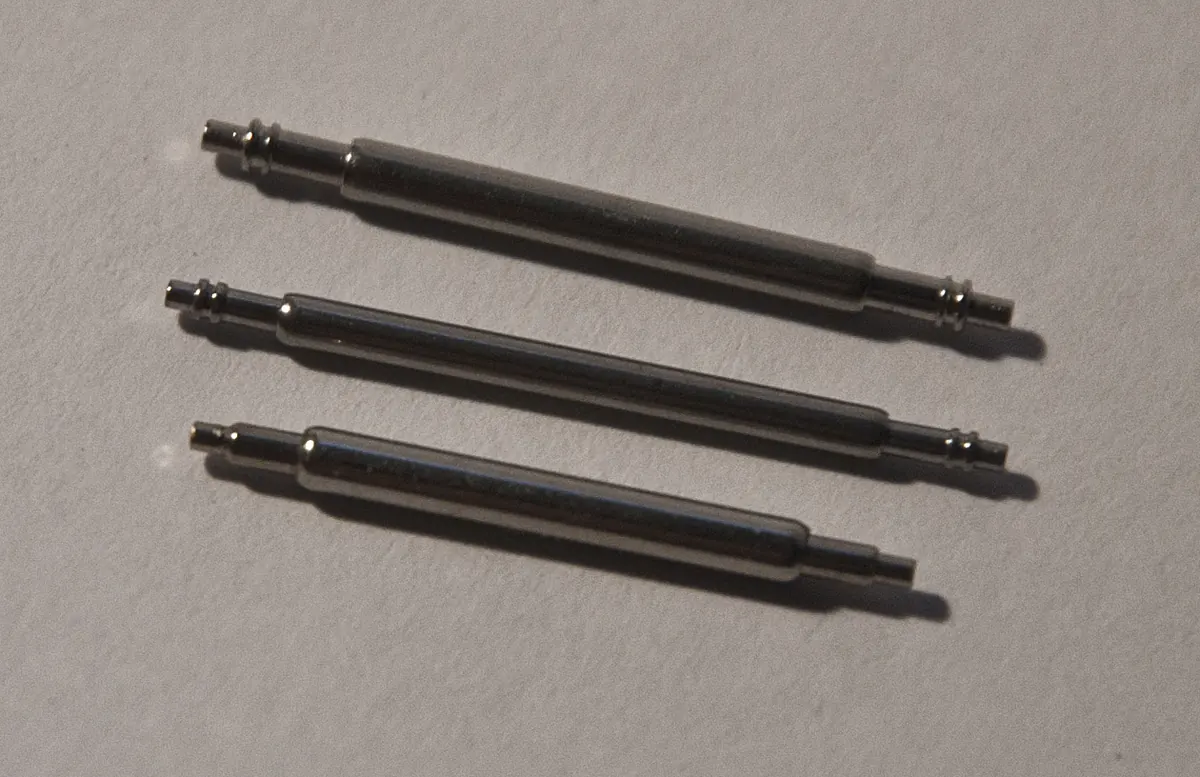
Use a fresh pair with a new strap when the old ones are rusty, bent or of unknown quality. Match the length to the lug width and the diameter to the lug holes, 1.5, 1.8 and 2.0 mm are common. Quick-release straps need a strap with a notch for the lever. Bars for drilled lugs have no shoulder. See spring bar tools and spring bars for details.
FAQ
How do I change my watch band?
Compress the spring bar at each end of the strap with the fork of a spring bar tool, lift the old strap out, put the spring bar into the new strap, seat one end in the lug hole, compress the other end, align it and let it snap in. Then pull on the strap to check.
Can I change a watch band without a spring bar tool?
On quick-release straps, yes, slide the lever. On standard spring bars people use a small screwdriver or a knife, but it slips easily and scratches the lug. A spring bar tool is inexpensive and much safer.
What size strap do I need?
Measure the distance between the lugs in millimeters. The strap width at the lugs must match it.
How do I remove a metal watch band?
The same way, most bracelets are also held by spring bars in the end links. Compress the bar between end link and lug. Some integrated bracelets and some brands use screws or their own quick-release system.