Brand guide
How to adjust a Skagen watch band
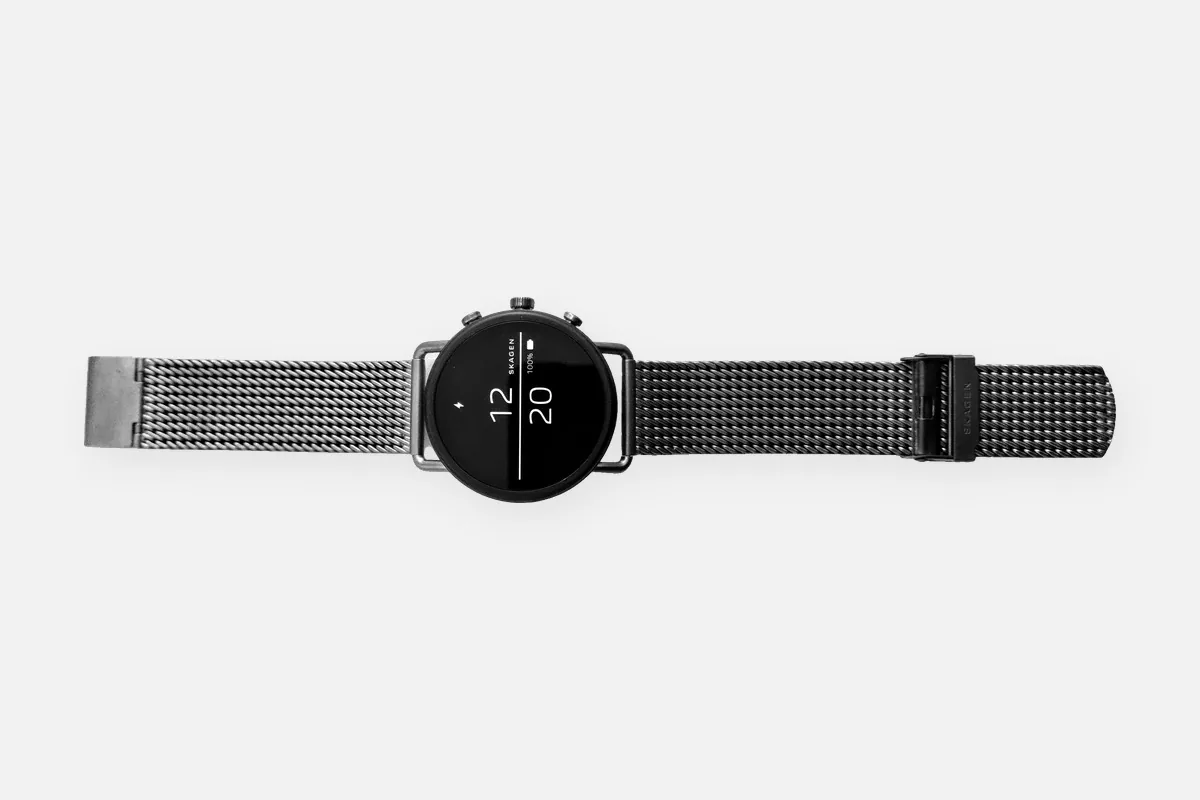
Skagen is best known for Milanese mesh with a sliding clasp. That band has no links. You set the length by moving the clasp, not by shortening the mesh, and Skagen describes the method in its own instructions.
Skagen also makes link bracelets, and these use the same arrow-marked pins as the rest of Fossil Group.
Adjusting a Skagen mesh band
- Open the clasp. Lay the watch on a soft cloth, face down.
- Lift the locking plate. Put a small flat screwdriver into the slot in the middle of the clasp and lift the plate. Skagen says to keep the tool handle pointing toward the watch case.
- Shift the clasp. Slide it along the mesh to the length you want.
- Seat it in an indentation. It must sit in one of the indentations on the back of the band.
- Press it closed. Press the plate down until it snaps shut, then test by pulling on the band.
Seat it properlyThe clasp only locks in the indentations on the back of the mesh. Before you wear it, pull on the band. If the clasp moves, it is sitting between two indentations.
Skagen link bracelets
Skagen's link bracelets use arrow-marked push pins. Skagen's instruction booklet gives the procedure: push the pin out in the direction of the arrow with a small pointed tool, remember that one link means two pins, remove an equal number from each side of the clasp, and tap the pins back in with a small hammer. The Fossil guide explains how to read the arrows.
Replacing a mesh or link band
Skagen sells leather and silicone replacement straps that you can fit yourself. According to Skagen, linked bracelets and mesh bands are replaced at its authorized service center. And do not cut a mesh band shorter at home: it is irreversible and never needed for a normal fit, because the clasp covers the adjustment range.
FAQ
How do I adjust a Skagen mesh watch band?
Open the clasp, lift the locking plate with a small flat screwdriver in the slot, slide the clasp along the mesh, seat it in an indentation and press it closed.
Can I shorten a Skagen mesh band permanently?
The clasp adjustment covers normal wrist sizes. Skagen replaces mesh bands at its service center. Cutting the mesh at home is irreversible and not recommended.
How do I remove links from a Skagen watch?
Push the pins out in the direction of the arrows with a small pointed tool, two pins per link, remove links evenly on both sides of the clasp and tap the pins back in.